

In Mexican households, something has quietly changed over the past eight years.
It’s not just about buying a vacuum cleaner anymore. It’s not just about drying your hair faster or breathing cleaner air. It’s about how Mexican families increasingly view their homes as sanctuaries — and want the best possible technology to protect them.
Since launching in Mexico in 2018, Dyson has grown into a brand with an 8% retail share of the country‘s vacuum cleaner market, tied with iRobot and second only to legacy player Koblenz. By 2025, Mexico was recognized as one of Dyson’s fast-growing markets globally, alongside Korea, India, Poland, Singapore, and South East Asia. The company has built a dedicated team in Mexico City’s affluent Polanco district, and continues to expand across the region.
But what explains this rapid ascent? It’s not just the marketing or the sleek design. It’s a deep alignment between Dyson‘s engineering-first philosophy and the changing priorities of Mexican consumers — who are increasingly health-conscious, tech-savvy, and unwilling to compromise on quality.
Today, let’s explore this “silent revolution” from a different perspective: not what Dyson sells, but what Dyson represents for Mexican families today.
01 🇲🇽 When Technology Meets Mexico’s Urban Health Challenges
Air quality is a real concern in Mexican cities.
Children with asthma living in highly polluted megacities are at increased risk of poor asthma control and airway inflammation. Studies of environmental contingencies in Mexico City have shown that up to 44% of vulnerable populations experienced exacerbations of respiratory diseases during pollution events. For households with children, elderly family members, or anyone living with allergies or asthma, the question isn’t “Should we invest in air purification?” — it’s “Can we afford not to?”
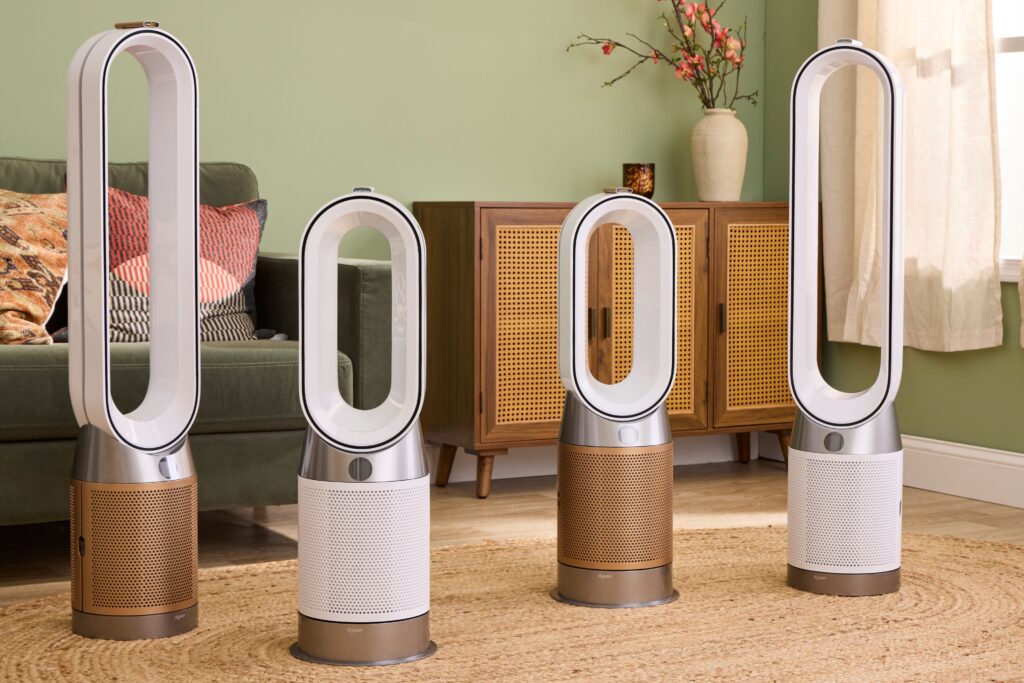
Dyson has responded with advanced whole-machine HEPA filtration systems — they capture up to 99.99% of microscopic particles, allergens, and viruses as small as 0.1 microns. But unlike traditional air filters that simply trap what passes through them, Dyson’s approach is proactive. The latest models can integrate AI-driven air quality prediction, using real-time municipal pollution data alongside indoor sensor feedback to automatically adjust fan speed and filtration.
For a parent in Mexico City or Monterrey, that means peace of mind. You’re not just cleaning the air in your living room — you’re engineering an indoor sanctuary that actively responds to the world outside. And in 2026, as Dyson launches more products than ever before across different price points, that peace of mind is becoming more accessible than ever.
02 💡 The Science of “Seeing the Invisible” — and Why Mexicans Are Embracing It
There’s a phrase that shows up repeatedly in Dyson customer reviews across Mexico: “I had no idea all that dirt was there.”
One Amazon Mexico user describes how their Dyson Outsize picks up “every bit of dust and little bits,” with the hair-collecting tool working exceptionally well. Another writes that the battery lasts long enough to clean multiple large rooms, and that the machine makes their daily cleaning routine dramatically easier.
What makes this possible isn’t just suction power — it’s visibility. Dyson’s Fluffy Optic™ cleaner head uses a precisely angled blade of green laser light to reveal twice the amount of invisible dust on hard floors. In MAX mode, the Gen5detect™ generates 300 Air Watts of suction propelled by a digital motor spinning at up to 135,000 RPM. You’re not imagining you’re cleaning — you’re seeing the proof on an LCD screen that shows, in real time, exactly what you‘ve removed.
The Mexican appliance market is expected to grow from US16.39billionin2025toUS20.74 billion by 2030, driven in part by premiumization and the incorporation of smart technologies. Consumers today don’t just want appliances that work — they want intelligent tools that deliver measurable, verifiable results. Dyson’s data-driven approach — giving you particle counts, battery readings, and real-time feedback — turns cleaning from a chore into a satisfying, evidence-backed process.
03 🌿 More Than Products: A Philosophy That Resonates in Mexico
Mexican consumers, like their counterparts worldwide, are becoming more informed, more discerning, and more intentional about their purchases.
Today’s appliance decisions go “beyond aesthetics or functionality,” integrating “energy consciousness, rational analysis of lifetime cost, and a more mature relationship with digital channels.”. There is also a structural transformation in how Mexicans choose and use their appliances — driven by economic, technological, regulatory, and cultural factors that point to a consumer who wants not just a product, but a solution.
Dyson embodies that shift. When a Mexican family invests in a Dyson vacuum, hair dryer, or air purifier, they’re not just buying a machine — they’re buying engineering innovation, long-term reliability, and peace of mind. They’re joining the ranks of customers worldwide who’ve left behind the frustration of “disposable appliances” and embraced the Dyson difference. As one longtime user wrote in a review after switching from another brand: “There’s just no comparison.”
That sentiment — born of daily experience, not just brand affinity — is Dyson’s greatest marketing asset in Mexico. And it transcends product categories.
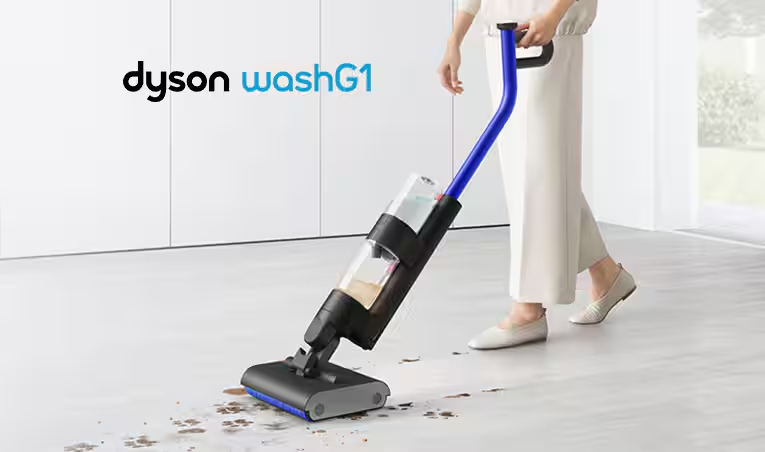
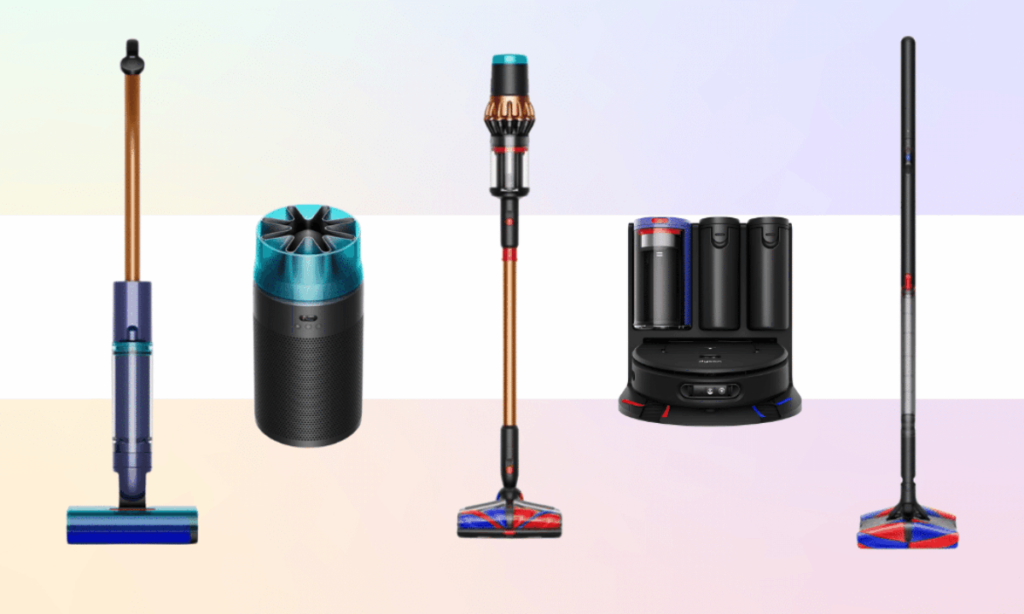
In hair care, the Dyson Supersonic uses intelligent heat control, measuring drying temperatures 40 times per second to prevent extreme heat damage. In floor care, the new Dyson Clean+Wash Hygiene refreshes the roller with clean water on every rotation, combining wet and dry cleaning in a single pass. Across categories, Dyson isn’t just refining old ideas — it’s reimagining how everyday tasks can be done better.
04 🛍️ From E‑Commerce Boom to Brand Trust Boom
Another factor powering Dyson’s growth in Mexico is the country’s e‑commerce explosion.
E‑commerce revenue in Mexico in 2026 alone is expected to surpass US215billion(MX215billion(MX3.7 trillion) — roughly US$600 million every single day. By 2026, Mexico is projected to actually overtake the United States in e‑commerce penetration (17.7% vs. 17%), a milestone that reflects the extraordinary digital maturity of Mexican consumers. Currently, 77.2 million active digital consumers are making purchases online, with e‑commerce growing at over 25% annually — faster than any other region in the world.
This digital ecosystem has made it easier than ever for Mexican families to research Dyson, compare models, read thousands of reviews on Amazon Mexico, and make informed purchasing decisions — all from the comfort of their homes. Online sales of home appliances in Mexico are gaining significant traction fueled by convenience and competitive pricing.
But e‑commerce is just the entry point. Once a Mexican customer brings a Dyson product home, the experience keeps them loyal. One passionate user with a large house (and two long-haired cats in addition to dogs) says they vacuum more often now simply because the cordless design is so easy — and they feel their home is actually cleaner than before. That is the kind of brand advocacy that no marketing campaign can buy.
🏁 Final Thoughts: Dyson Is Not a Luxury — It’s an Investment
Dyson products are not cheap. A Gen5detect™ vacuum retails for over $1,000 USD, and Mexico-specific pricing on the Dyson V16 Piston Animal starts around 21,999 Mexican pesos. But Mexican consumers increasingly see value differently: not as “lowest price today,” but as best performance over time. That‘s the premiumization trend reshaping the category, and Dyson is at the forefront.
Dyson represents a clear departure from the past — a new era of Mexican home life defined by cleaner air, visible cleanliness, and engineering you can trust. As Dyson continues to expand in Mexico (with even more new products and price points coming in 2026), one thing is certain:
The silent revolution in Mexican homes isn’t silent anymore.